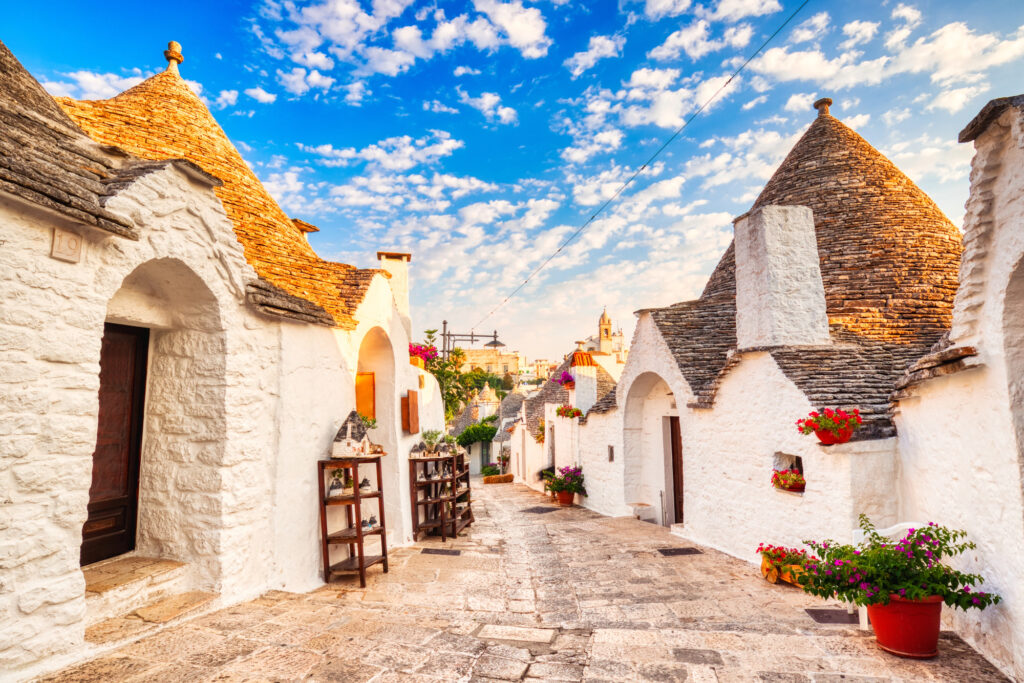
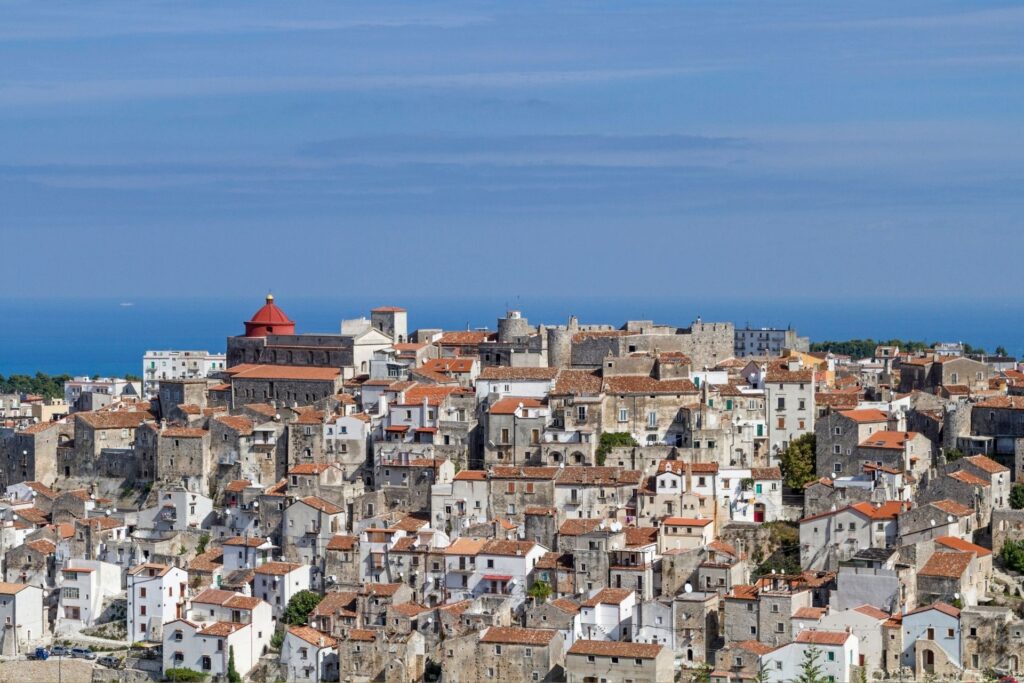
When most people think of the Salento, their minds immediately drift to Caribbean-style beaches and the crystalline waters of the Adriatic and Ionian coasts. Yet, this sun-drenched peninsula in the “heel” of Italy’s boot is far more than just litorals and beach clubs. Beyond the shoreline lies a silent world of historic hamlets, ancient farming traditions, Baroque masterpieces, and secret villages that hold the true soul of Puglia.

Venturing inland, through silver-green olive groves and fortified masserie (farmhouses), you discover a millennial history shaped by Greek, Roman, and Norman conquests. Towns like Galatina, Manduria, and Specchia offer an authentic face of Salento—far from the summer crowds—where the rhythm of life is still dictated by the sun and the soil. To truly understand the region, one must look beyond the waves and explore the triangle formed by Lecce, Brindisi, and Taranto.
Galatina and Copertino: The Mystical Heart
One of the most captivating stops is Galatina, a city of art and the epicentre of Salentine mysticism. The town is dominated by the Basilica of Santa Caterina d’Alessandria, a Romanesque-Gothic jewel featuring mesmerizing medieval frescoes that rival those of Assisi. Galatina is also the birthplace of the Pasticciotto—the iconic shortcrust pastry filled with lemon custard—and the legendary home of the Tarantismo, a folk ritual involving music and dance used to “cure” those bitten by spiders.

A short drive away lies Copertino. Its massive Renaissance castle, surrounded by a deep moat, stands as a testament to the region’s strategic military past. Copertino is globally famous as the birthplace of Saint Joseph of Cupertino, the “Flying Saint,” whose childhood home remains a significant site for spiritual pilgrims.
Manduria and Taranto: Land of the Messapians and Spartans
Moving toward the border with the province of Taranto, you find Manduria. This ancient city guards the vestiges of the Messapian civilization. Its Archaeological Park is an open-air treasure featuring megalithic walls and the famous Plinian Fountain, described by Pliny the Elder nearly two thousand years ago.
Manduria is also the world capital of Primitivo di Manduria wine, among the best-known Puglian wines worldwide
Visiting its historic cellars and the Museum of Primitivo Wine Culture is a sensory journey into the strength and warmth of the Salentine earth.

For those seeking a deeper dive into antiquity, Taranto—the “City of the Two Seas”—is an essential detour. Once the most powerful colony of Magna Graecia, its MARTA (National Archaeological Museum) houses the famous “Gold of Taranto,” a breathtaking collection of Hellenistic jewelry. The city’s old town, situated on an island and connected by a swing bridge, offers a raw, authentic charm where fishermen still sell their catch against the backdrop of the Aragonese Castle.
Martano and the Greek Legacy: The Grecìa Salentina
In the heart of the peninsula lies the Grecìa Salentina, an enclave where a Greek dialect called Griko is still spoken. Martano, the largest town in this linguistic island, is known as the “City of Aloe.” Walking through its historic center, you’ll discover case a corte (courtyard houses) and noble palaces that echo with Byzantine influences. The Aragonese Castle and the Monastery of Santa Maria della Consolazione complete the image of a town where time has seemingly paused.
Specchia and Melpignano: Timeless Villages
Often cited as one of Italy’s most beautiful villages, Specchia sits on a hill overlooking the lower Salento. Its labyrinth of cobbled streets, known as chianche, hides underground olive oil presses (frantoi ipogei), reminding us of the region’s historical reliance on “liquid gold.”
The Palazzo Risolo dominates the main square, offering a postcard-perfect view of agrarian nobility. Nearby, Melpignano attracts global attention once a year for the Notte della Taranta festival. However, visiting in the “off-season” reveals the quiet beauty of the Augustinian Convent and the golden Lecce-stone architecture that glows at sunset.
Brindisi: The Gateway to the East
 While often overlooked as a mere port of transit, Brindisi is a city of deep historical resonance. As the terminus of the Appian Way, it was the gateway to the Orient for Roman legions and Crusaders alike. The two Roman Columns overlooking the harbor remain the city’s iconic symbol. Explore the Tempio di San Giovanni al Sepolcro, a circular 11th-century church, to feel the Templar history that permeates this breezy Adriatic port.
Lecce: The Baroque Masterpiece
No journey through the interior is complete without Lecce, the “Florence of the South.” This city is a triumph of the Baroque, sculpted from the malleable Lecce stone—a soft, golden limestone that local artisans carved into intricate lace-like designs. 
Piazza Duomo and the Basilica di Santa Croce are essential stops, but don’t miss the Roman Amphitheatre right in the center of the city. Between the artisan papier-mâché (cartapesta) workshops and the vibrant nightlife within 18th-century courtyards, Lecce represents the perfect harmony of past and present.
Where Earth Meets Sea: Santa Cesarea Terme
As you move back toward the coast, the landscape changes dramatically at Santa Cesarea Terme. Here, the rugged cliffs are dotted with Moorish-style villas, such as the stunning Villa Sticchi, whose domes look like something out of an Arabian nights tale.
Exploring the “Inner Salento” means discovering a land of history, music, and ancient flavors. It is a place where every village tells a different story, offering an authentic experience for those willing to wander off the beaten path into the heart of the Mediterranean.