In the heart of Basilicata, far from the coastal resorts and major art cities, two villages seem to grow directly from the mountains. Castelmezzano and Pietrapertosa face one another across the valley of the Basento, surrounded by the sharp sandstone peaks known as the Lucanian Dolomites.
They are often visited together, but each has its own character. Castelmezzano forms an amphitheatre beneath the rocks, while Pietrapertosa rises along a ridge and preserves traces of its medieval Arab-influenced quarter. Both reward slow exploration and offer a striking introduction to Basilicata.
Castelmezzano, a village beneath the peaks 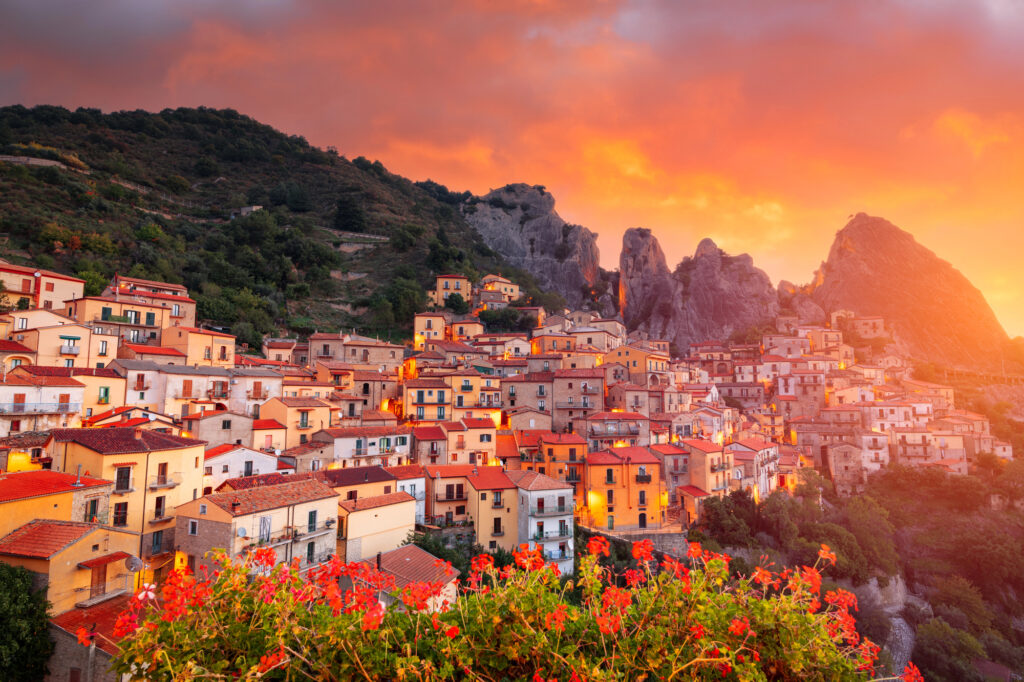
Approaching Castelmezzano is part of the experience. The road winds through the mountains before the village suddenly appears, its houses clustered beneath pale, jagged rocks. From Piazza Emilio Caizzo, lanes and staircases climb through the historic centre towards panoramic points and the higher parts of the settlement.
The Mother Church of Santa Maria dell’Olmo is one of the principal landmarks, but the village itself is the real attraction. Stone portals, small balconies and views framed by the mountains make even a short walk memorable. At sunset, the rock formations change colour and the village becomes especially atmospheric.
Pietrapertosa, carved into the mountain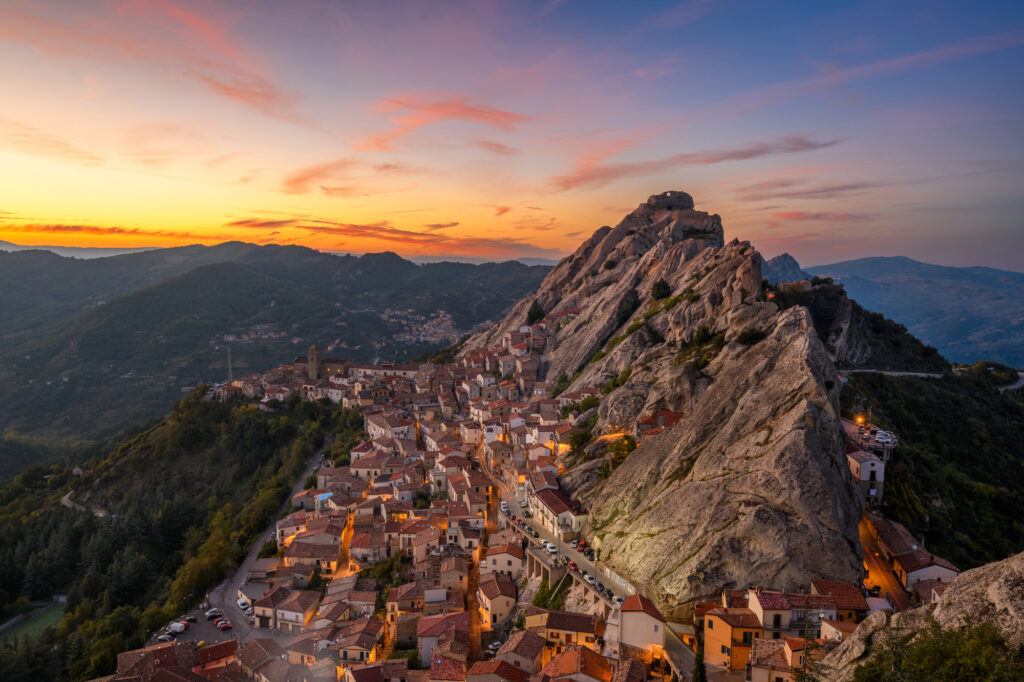
Across the valley, Pietrapertosa is among the highest villages in Basilicata. Its name refers to the “pierced stone” associated with the surrounding rock. The oldest district, known as Arabata, is a labyrinth of narrow lanes built against the slope and traditionally connected with the period of Arab presence in southern Italy.
Above the village are the remains of a castle, reached by a steep path and steps cut into the rock. The climb requires care, but the view opens across the Lucanian Dolomites and towards Castelmezzano. Travellers should check local access conditions and weather before attempting higher paths.
Walking between the villages
The two communities are linked culturally and geographically. Hiking routes cross the surrounding landscape, including paths through woodland and rocky terrain. Distances can be deceptive because of elevation, so walkers should use marked trails, carry water and obtain updated local information before setting out.
The area is also known for the Volo dell’Angelo, a seasonal high-speed zip line between the mountains. It is an optional adventure rather than an essential part of the visit; availability depends on operating periods, weather and booking conditions.
Food from inland Basilicata
This is a landscape of robust rural cooking. Look for handmade pasta such as strascinati, dishes flavoured with cruschi—sweet peppers dried until crisp—local cheeses, pulses, mushrooms and meat cooked over the fire. Meals are generally more closely connected to mountain agriculture than to the seafood cuisine associated with southern Italy’s coasts.
How much time do you need?
A full day allows a first look at both villages, but staying overnight creates a more rewarding experience. The streets become quieter after day visitors leave, and the changing light is one of the pleasures of the landscape. A car is the most flexible option, although mountain roads require unhurried driving.
Late spring and early autumn offer comfortable temperatures for walking. Summer can be lively, while winter brings a more austere atmosphere and possible weather disruption. Whatever the season, Castelmezzano and Pietrapertosa show that some of Italy’s most powerful landscapes lie far beyond the familiar routes.