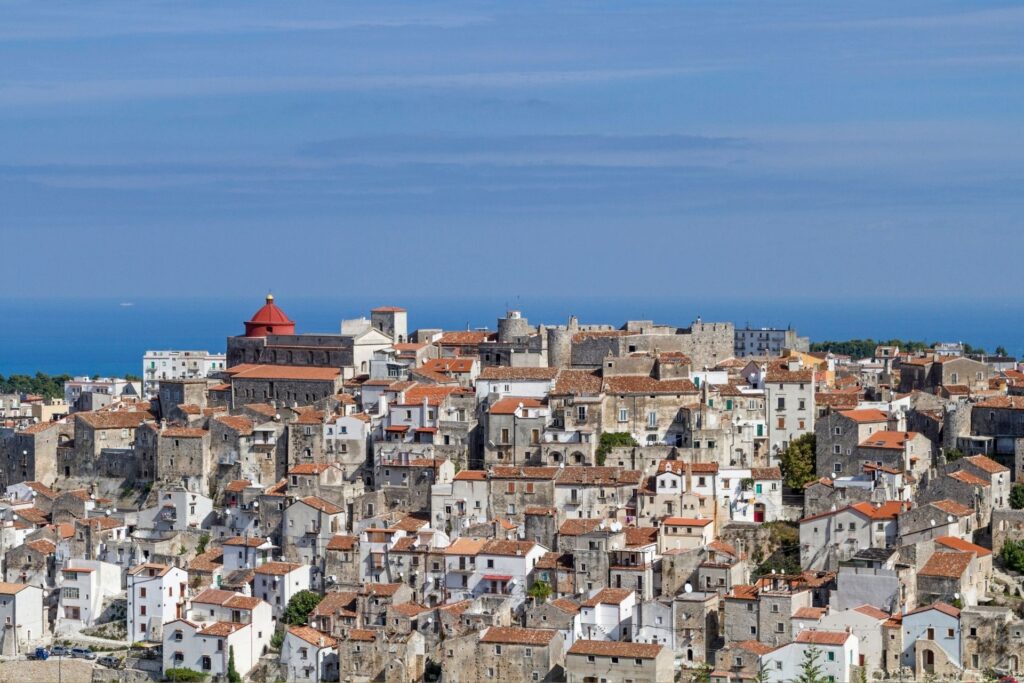
Puglia is usually presented as a summer destination: long beaches, whitewashed towns, outdoor dinners and days shaped by the sea. Yet when the busiest season ends, the region does not simply close. Autumn in Puglia reveals a different landscape, one connected to olive groves, vineyards, woodland, local markets and villages returning to their everyday rhythm.
The weather can still be mild, especially in September and early October, but autumn travel requires flexibility. Some beach services and seasonal businesses close, daylight becomes shorter and rain is possible. In exchange, roads are quieter, accommodation can be easier to find and historic centres are no longer dominated by summer crowds.
Why visit Puglia in autumn?
Autumn is ideal for travellers interested in food, landscapes and slow exploration rather than a conventional seaside holiday. You can walk through towns at a natural pace, stop at bakeries and markets, visit farms and wineries, and spend more time understanding the differences between Puglia’s territories.
The region is long and varied. The Gargano in the north combines forest and cliffs; the Valle d’Itria is characterised by trulli, dry-stone walls and white villages; central Puglia is shaped by olive groves and Adriatic towns; Salento extends between two seas, with baroque architecture and a strong rural identity.
White villages without the summer crowds
Autumn suits the historic centres of the Valle d’Itria particularly well. Locorotondo, Cisternino and Martina Franca can be combined in a compact itinerary, while Ostuni offers wider views towards the Adriatic. Alberobello remains popular throughout the year, but visiting early in the day or outside weekends creates a calmer experience. 
Further south, Lecce’s warm-coloured stone responds beautifully to lower autumn light. The city deserves more than a rushed stop: churches, courtyards, workshops and evening walks reveal the character described in our guide to Lecce and its baroque soul.
The olive harvest
Olive harvesting is one of the defining activities of the Apulian autumn. Timing varies according to cultivar, location, weather and the style of oil being produced, but many mills become active between October and the beginning of winter. Freshly pressed oil has intense aromas and a peppery flavour that is best appreciated on simple bread.
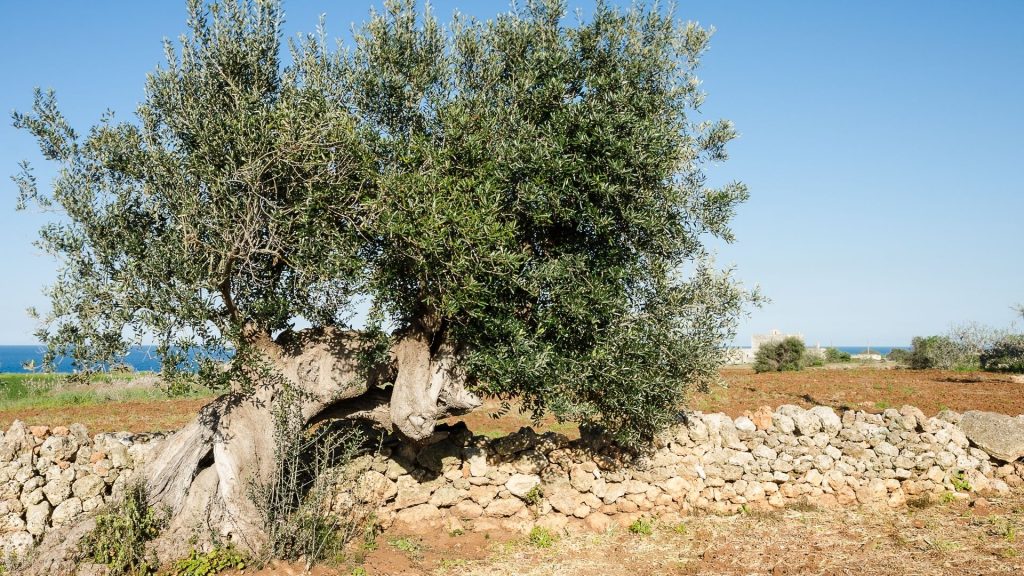 Visitors should arrange mill or farm experiences in advance rather than arriving without notice during a busy working period. Tastings are more useful when they explain cultivars, harvesting methods, storage and the difference between a fresh, well-made oil and one damaged by poor handling. Our article on Puglia’s extra virgin olive oil offers additional background.
Wine, grapes and autumn food
The grape harvest begins earlier than the main olive harvest and differs by area and variety. By autumn, wineries are working with the new vintage while offering tastings of established wines. Primitivo, Negroamaro, Nero di Troia and Bombino are among the names travellers may encounter, alongside a growing range of white and rosé wines. Learn more in our introduction to the wines of Puglia.
Seasonal tables bring together mushrooms, pumpkin, chicory, pulses, chestnuts and baked dishes. Focaccia, orecchiette, cheeses and grilled meat remain available, but the change of season gives them a different context. Weekly markets and small food shops often provide a better sense of local habits than menus designed exclusively for visitors.
Coastal walks and the two seas
The sea remains part of the journey even when swimming is no longer the main activity. Adriatic towns such as Monopoli and Polignano a Mare are easier to explore on foot, while Salento’s coast offers lighthouses, cliffs and open views. Conditions can change quickly, so cliff paths and exposed coastal routes should be approached carefully after rain or in strong wind. 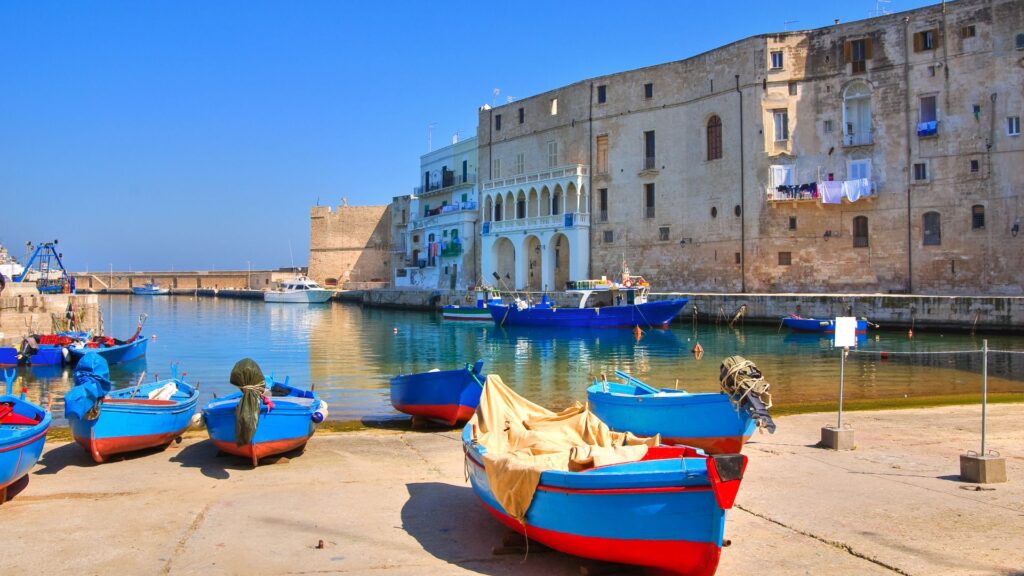
For a central-coast itinerary, read our guide to Monopoli and Polignano a Mare. Travellers heading farther south can combine the coast with the inland places described in the hidden hinterland of Salento.
Forests and countryside 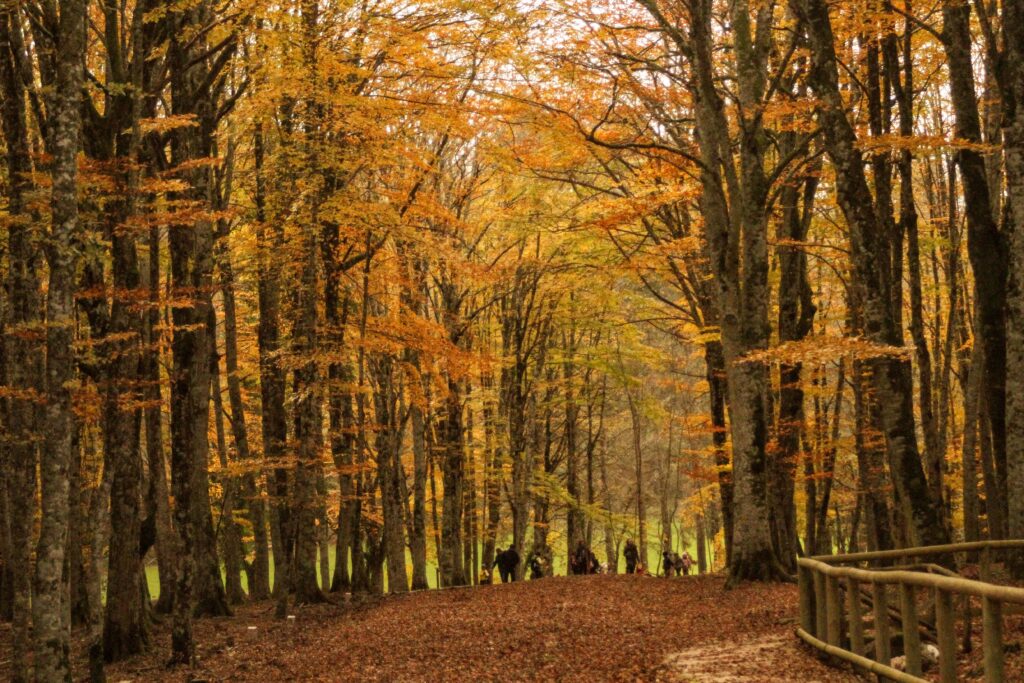
Puglia is not only an olive-covered plain. The Umbra Forest in the Gargano offers beech woods and marked trails, while the Alta Murgia presents a more open landscape of rocky pasture, masserie and wide horizons. Autumn colours are influenced by elevation and weather, so exact foliage periods cannot be guaranteed.
Practical advice for an autumn journey
A car provides the greatest freedom in rural areas, although rail can work well between some larger coastal towns. Check accommodation, restaurant and attraction opening days, particularly from late October onwards. Pack layers, a waterproof jacket and shoes suitable for polished stone streets and country paths.
Five to seven days allow a focused itinerary in one part of the region. Trying to combine Gargano, Bari, the Valle d’Itria and Salento in a short trip creates too much driving. Choose one or two neighbouring areas and leave time for unscheduled discoveries.
Puglia in autumn is less theatrical than Puglia in August, and that is precisely its strength. The region becomes easier to read: fields are being worked, villages recover their local pace and food returns to the centre of the travel experience.