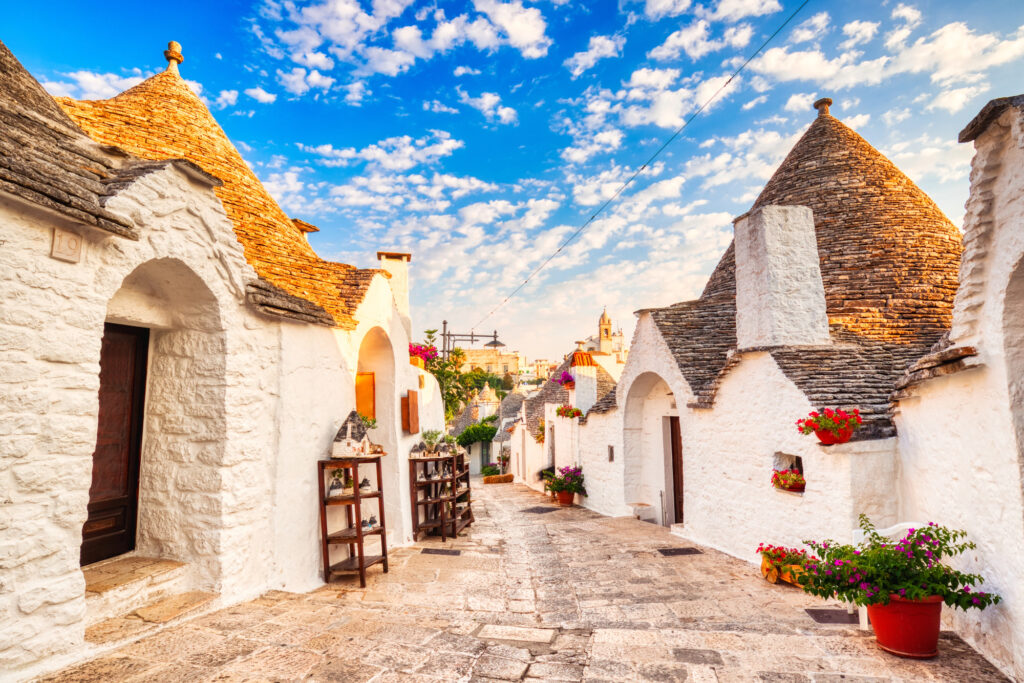
Puglia is often imagined as a landscape of whitewashed towns, olive groves and beaches washed by clear blue water. Yet in the north of the region, on the Gargano promontory, the scenery changes. Forests climb towards rocky hills, citrus gardens perfume the countryside and old villages look down towards the Adriatic. Vico del Gargano is one of the most rewarding places from which to discover this quieter side of Puglia.
Built on a hillside a short distance from the coast, Vico is a compact maze of stone houses, arches, stairways and narrow lanes. It is close enough to the seaside towns of Rodi Garganico and Peschici for a day trip, but its atmosphere belongs to the inland Gargano: slower, cooler and closely connected to the surrounding land.
Walking through the old town
The pleasure of Vico lies less in following a checklist than in walking without hurry. The historic centre is formed by small neighbourhoods gathered around churches, courtyards and passages cut between tall stone buildings. Laundry hangs above alleys, doorways open onto steep steps and sudden viewpoints reveal the green landscape below. 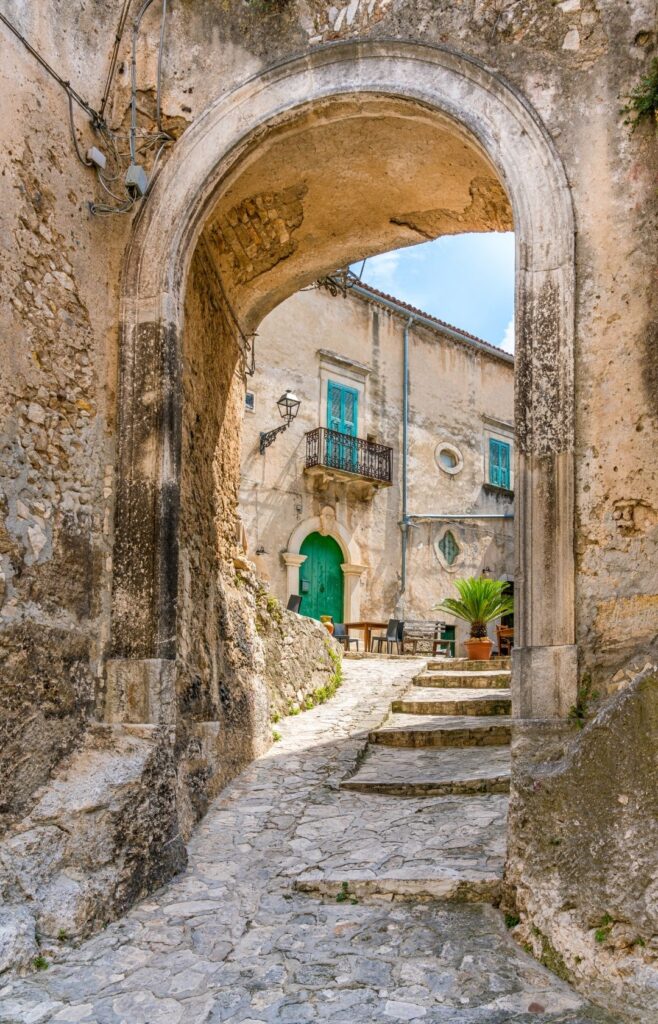
The Norman-Swabian castle recalls the strategic importance of the settlement, while the Collegiate Church of Santa Maria Assunta and the Church of San Marco are among the principal religious buildings. The old town also contains the Vicolo del Bacio, or “alley of the kiss”, a passage so narrow that two people can hardly cross without touching. This detail has helped give Vico its reputation as the “village of love”.
Saint Valentine and the oranges of Gargano
Vico celebrates Saint Valentine as its patron saint on 14 February. The religious festival of Saint Valentine in Vico del Gargano is also tied to the local citrus tradition: oranges and lemons decorate streets and sacred spaces, linking the winter celebration to the gardens cultivated along the nearby coast. The event offers an unusual reason to visit Gargano outside the summer season. 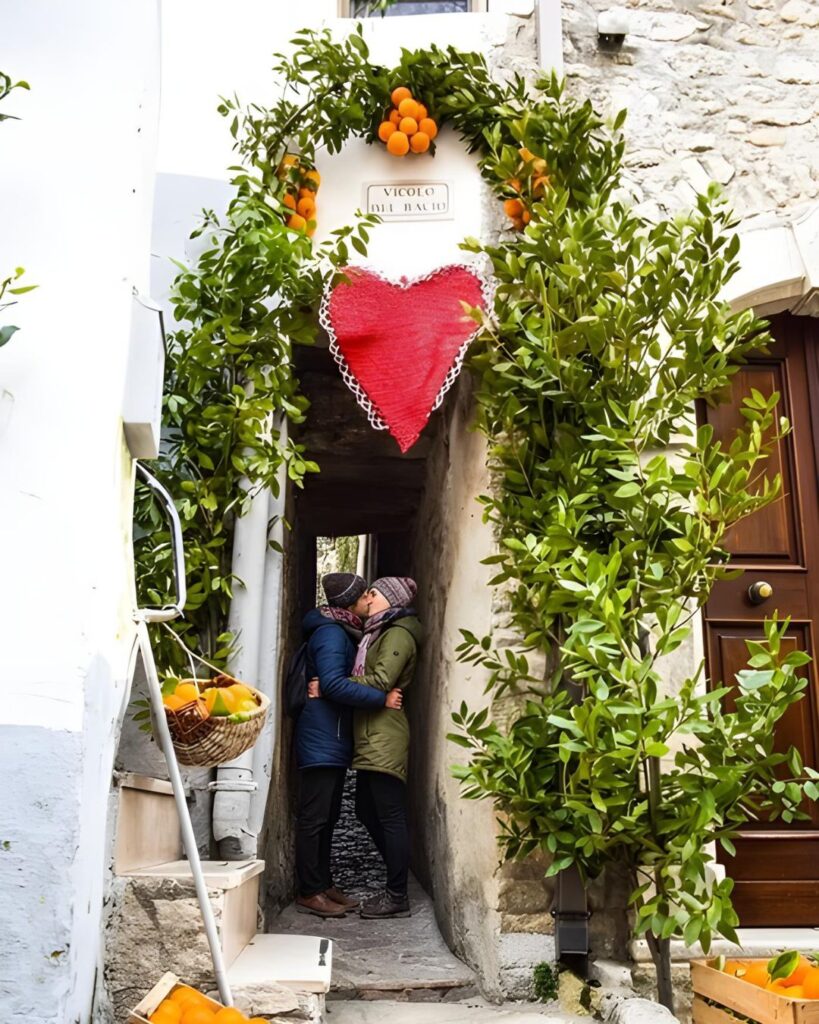
The citrus fruit of Gargano is part of the area’s agricultural identity. When travelling between Vico, Rodi Garganico and the coast, look for local marmalades, liqueurs and desserts prepared with oranges and lemons. They provide a flavourful bridge between the village and the sea.
Nature and places nearby
Vico stands close to the Gargano National Park and the Umbra Forest, one of the great woodland landscapes of southern Italy. Beech woods, walking paths and picnic areas make the forest a refreshing alternative to the coast, particularly in spring and early autumn.
The Adriatic is also within easy reach. Rodi Garganico offers beaches and a small harbour, while Peschici combines a dramatic clifftop centre with coves and sandy shores. Travellers with more time can continue towards Vieste or plan a boat trip to the Tremiti Islands.
What to eat
The local table reflects both the mountains and the sea. Typical meals may include handmade pasta, pulses, vegetables, caciocavallo cheese and dishes seasoned with Puglia’s extra virgin olive oil. On the coast, fish naturally becomes more prominent. For a simple souvenir, choose citrus preserves or products made by small local farms.
When to visit Vico del Gargano
Spring and early autumn are ideal for combining the village, forest walks and the coast without the busiest summer traffic. February is attractive for the Saint Valentine celebrations, while summer evenings bring a livelier atmosphere. Comfortable shoes are essential: the historic centre is steep, paved and best explored on foot.
Vico del Gargano does not need grand monuments to leave an impression. Its appeal comes from the relationship between stone lanes, wooded hills, citrus gardens and the nearby sea—a small but complete portrait of northern Puglia.